Lighting is an essential part of our daily lives, accounting for a significant portion of energy consumption in both residential and commercial spaces. With rising electricity costs and growing environmental concerns, finding energy-efficient lighting solutions has become a priority. Light Emitting Diode (LED) technology has emerged as a revolutionary solution, offering unmatched energy efficiency, durability, and versatility compared to traditional incandescent and Compact Fluorescent Lamps (CFLs).
Understanding LED Efficiency
Unlike traditional incandescent bulbs that produce light by heating a metal filament until it glows (wasting up to 90% of their energy as heat), LEDs generate light through a process called electroluminescence. When an electric current passes through a semiconductor material, it emits visible light. This direct conversion of electrical energy to light makes LEDs highly efficient, requiring up to 80% less electricity to produce the same amount of brightness (measured in lumens) as older bulb technologies.
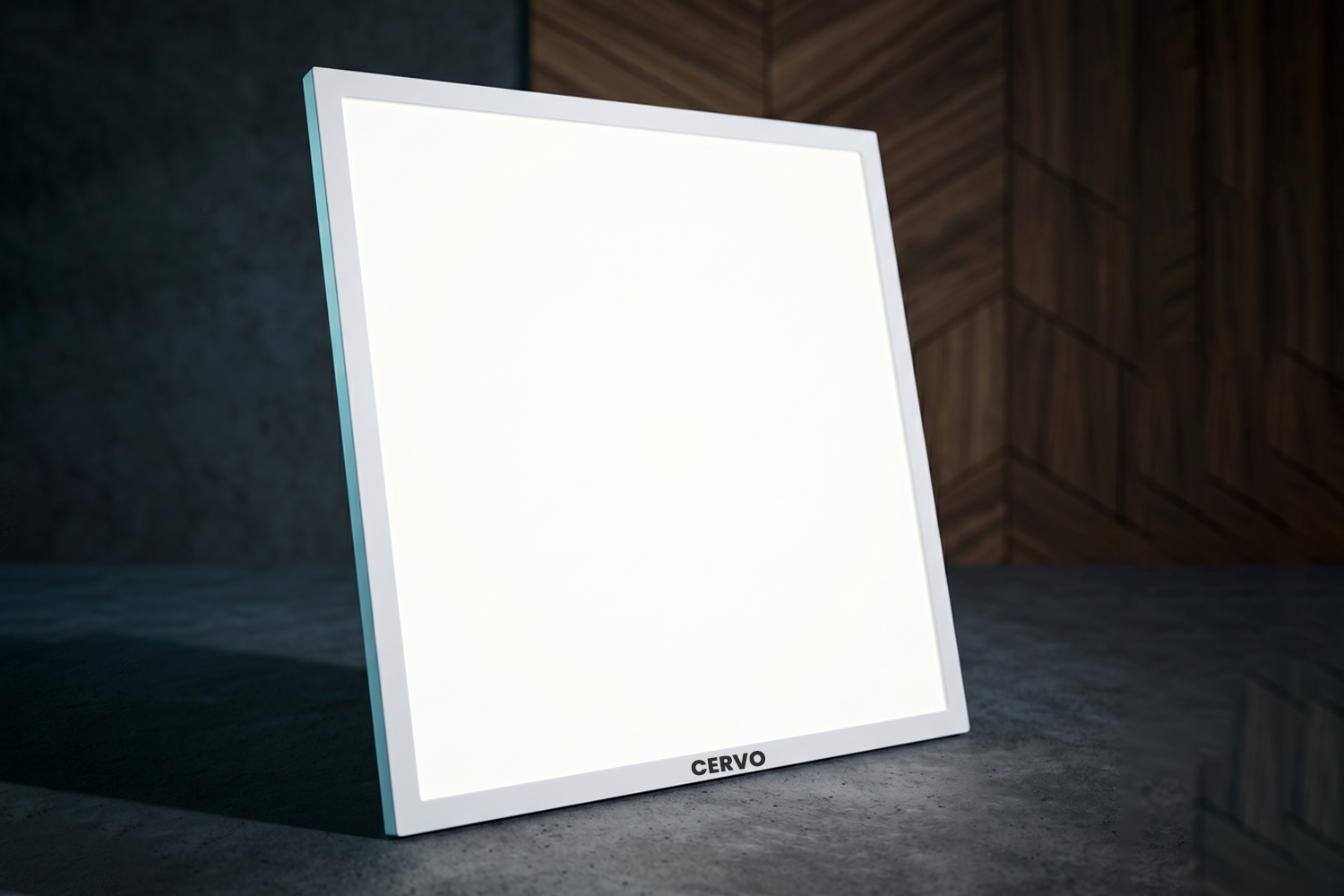
By upgrading to modern LED panel lights, downlights, and tube lights, homeowners and businesses can dramatically reduce their lighting-related energy consumption, resulting in immediate savings on monthly utility bills while maintaining excellent illumination quality.
Key Benefits of LED Lighting in Homes & Offices
Choosing LED lighting solutions from Cervo brings multiple advantages that go beyond simple energy savings. Here are the primary reasons why LEDs are the preferred choice for modern properties:
01
Unmatched Lifespan
LED lights can last up to 50,000 hours or more, which is 25 times longer than incandescent bulbs, reducing replacement and maintenance costs.
02
Extremely Low Heat Emission
LEDs operate at much cooler temperatures than traditional bulbs. This reduces the risk of accidental fires and lowers cooling load on air conditioning systems.
03
Eco-Friendly Design
Unlike CFLs, LEDs do not contain toxic mercury, making them safer for your family, workplace, and the environment. They are also 100% recyclable.
04
Instant Brightness & Durability
LEDs turn on instantly at full brightness without any warm-up time or flickering, and their solid-state construction makes them highly resistant to shock and vibration.
Smart Lighting Tips to Maximize Energy Savings
To get the absolute most out of your LED setup, consider incorporating these smart lighting best practices in your home or office layout:
Utilize Dimmers:
Install dimmable LED lights and compatible dimmer switches to adjust the brightness based on the time of day, saving even more power.
Leverage Task Lighting:
Use focused LED spot lights or desk lamps instead of lighting up an entire room when you only need light in a specific working area.
Integrate Smart Sensors:
Pair LED lights with motion sensors or timers in corridors, bathrooms, and conference rooms to ensure they are only active when occupied.
Everything You Need to Know
LED lights use up to 75-80% less energy than standard incandescent lighting. This massive difference in power consumption directly translates to a significant reduction in your energy bills.
Yes, but very little. While traditional bulbs convert 90% of energy into heat and only 10% into light, LEDs convert the majority of their energy into light. Any minor heat generated is safely dispersed via internal heat sinks.
An average high-quality LED light can last anywhere between 25,000 to 50,000 hours. If used for 6 hours a day, it can easily last for over 11 to 22 years before requiring a replacement.
Not all, but many are. You must check if the LED product is specifically labeled as "dimmable". In addition, you should pair them with LED-compatible trailing-edge dimmers to prevent flickering or humming noises.
Yes, LED lights are completely safe for your eyes. They do not emit ultraviolet (UV) or infrared (IR) radiation. For maximum visual comfort, choose warm or natural white color temperatures for living rooms and offices.